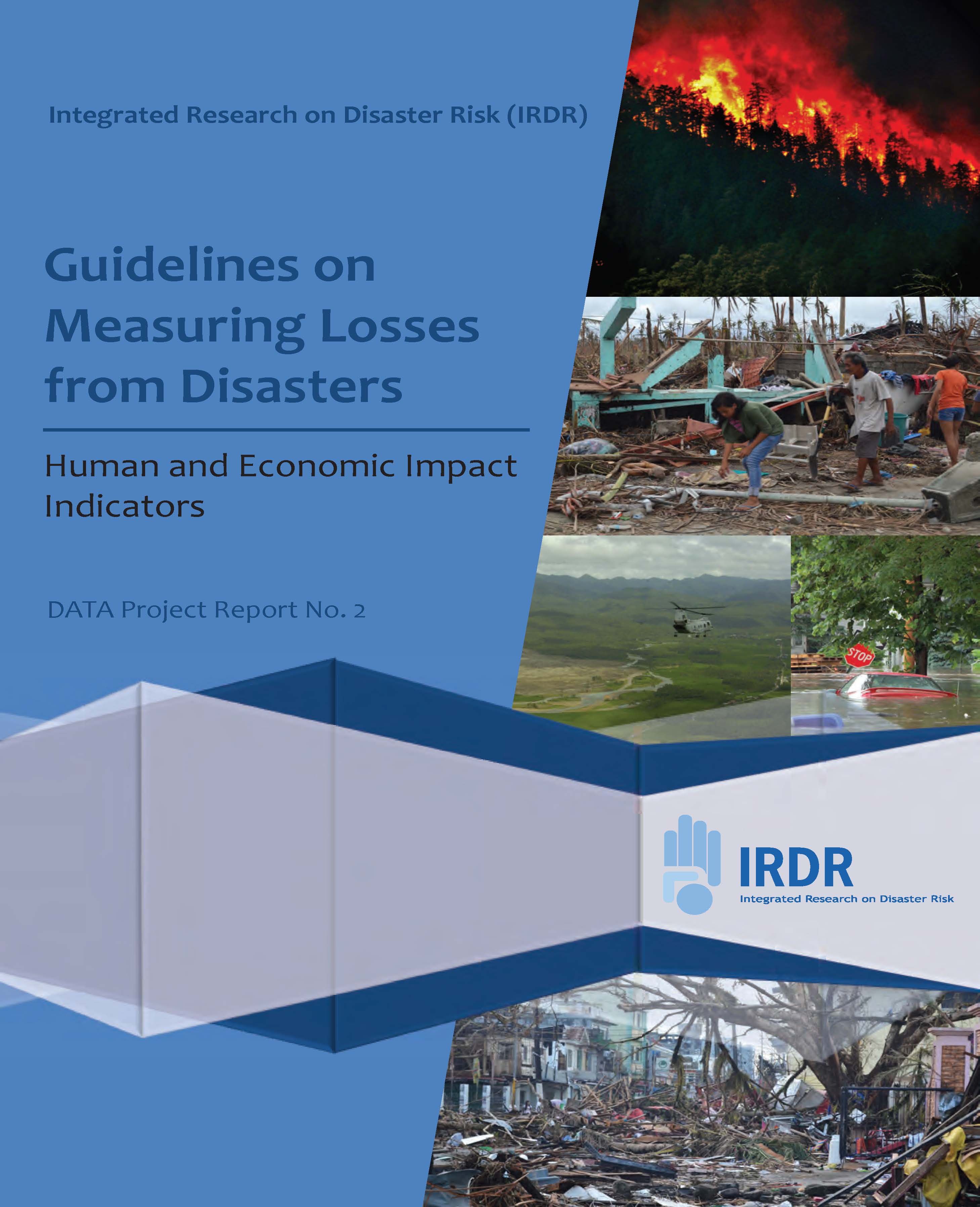
Integrated Research on Disaster Risk. (2015). Guidelines on Measuring Losses from Disasters: Human and Economic Impact Indicators (IRDR DATA Publication No. 2). Beijing: Integrated Research on Disaster Risk. Understanding and documenting impacts from natural hazards is the foundation for decision-making and policy-setting in disaster risk reduction. The impacts range from human effects such as displacement, …
Category: News
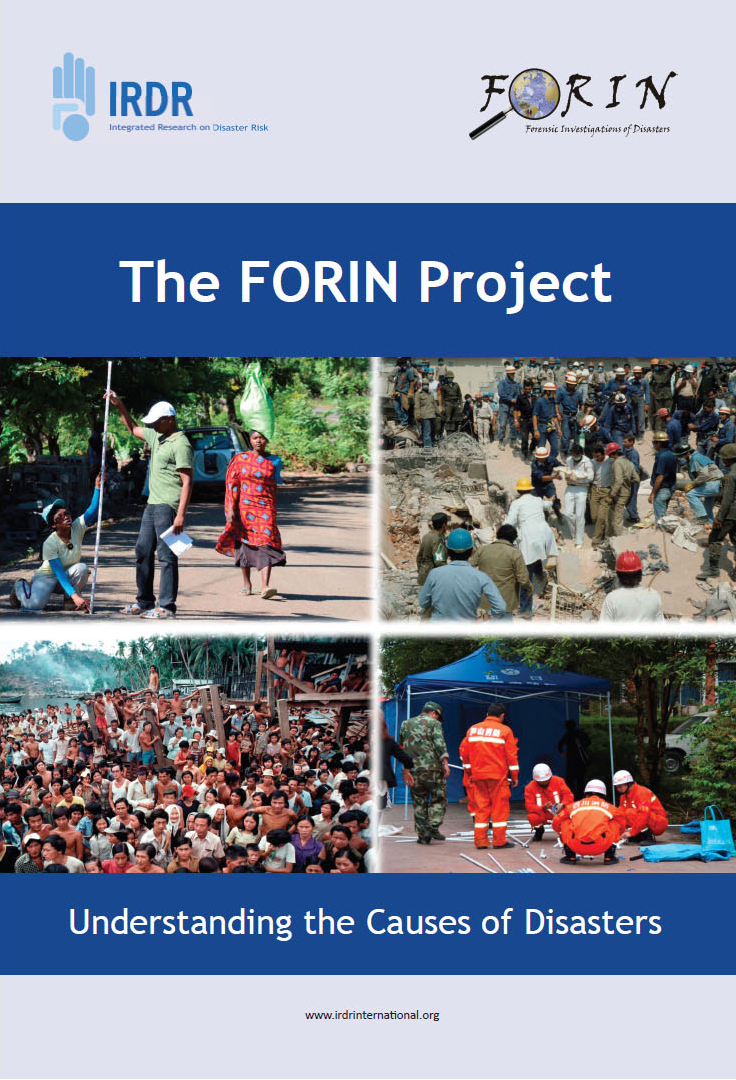
Integrated Research on Disaster Risk (2015). The FORIN Project: Understanding the Causes of Disasters. Beijing: Integrated Research on Disaster Risk. Contributors: Susan L. Cutter, Arabella Frasier, Jörn Birkmann, T. Blätgen, Maximilian Witting, Tailin Huang, Wei-Sen Li, Ian Burton, Anthony Oliver-Smith, Allan Lavell, and Irasema Alcántara-Ayala. Disasters are increasing in number, type and impact; but why …
IRDR publishes The FORIN Project, Understanding the Causes of DisastersRead More »
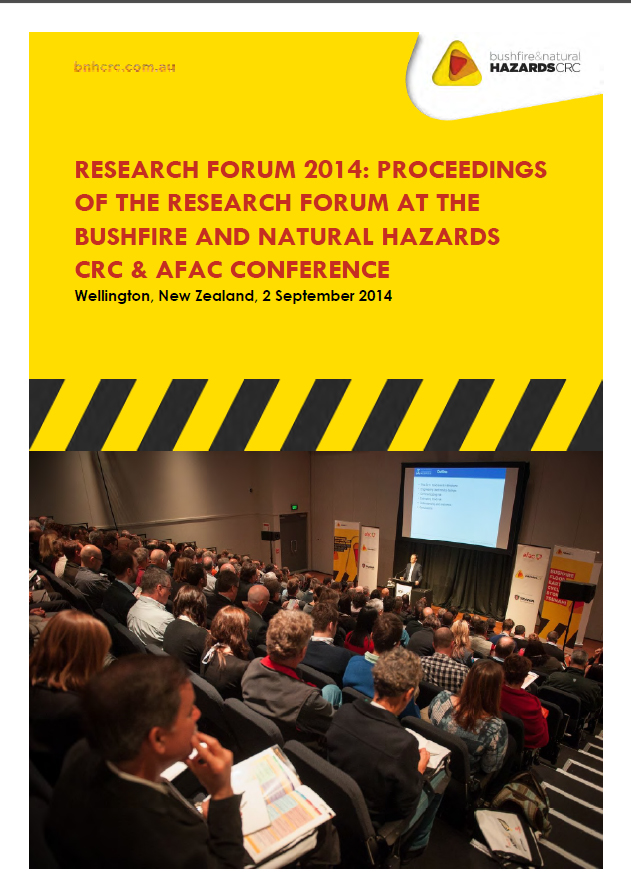
With a focus on the science of natural hazards the popular Research Forum is an annual lead-in to the joint CRC and AFAC conference. The collected proceedings of the 2014 Research Forum, held as part of the 2014 Bushfire and Natural Hazards CRC and AFAC conference in Wellington, New Zealand, are now available online. Download: …
Anthony Oliver-Smith of the University of Gainesville, Florida, is one of the authors of a recent report “Changing the Atmosphere: Anthropology and Climate Change”, issued by the Global Climate Change Task Force of the American Anthropological Association (AAA). The Task Force was chaired by Shirley J. Fiske, and was also the driving force behind the …
IRDR’s Anthony Oliver-Smith co-authors report on Anthropology and Climate ChangeRead More »
The ICSU ROAP Steering Group on Natural Hazards and Risk (SGNHR) held its meeting in Kuala Lumpur, Malaysia, on 24 and 25 February 2015. Chaired by James Terry from Zayed University, Dubai, United Arab Emirates, the group is currently composed of four other members, (Kruawun Jankaew, Chulalongkorn University, Thailand, Nigel Spear, SCOR, James Goff, UNSW, …
ICSU’s Regional Steering Group on Natural Hazards and Risk leverages fundingRead More »
The 2015 Global Assessment Report on Disaster Risk Reduction (GAR15), prepared by the UN Office for Disaster Risk Reduction (UNISDR) was launched on 4 March in New York City by the Secretary-General Ban Ki-moon,and states that economic losses from disasters are now reaching an average of US$250 billion to US$300 billion annually. The GAR main …
IRDR contributes to 2015 Global Assessment Report on Disaster Risk Reduction (GAR15)Read More »
The judges of the 2015 United Nations Sasakawa Award for Disaster Reduction have announced their final short-list of three. The nominees are Allan Lavell, a disaster risk researcher and consultant based in Costa Rica; the Australian Business Roundtable for Disaster Resilience and Safer Communities; and the Jeffrey Town Farmers’ Association of Jamaica. The four-strong Sasakawa …
Former IRDR SC member Allan Lavell shortlisted as UN Sasakawa AwardeeRead More »
IRDR International Centre of Excellence in Risk Interpretation and Action (ICoE-RIA) members; The Centre for Integrated Research on Risk and Resilience, King’s College London, and The Institute for Risk and Disaster Risk Reduction, University College London, alongside UKDC-Resilience member universities released “Disaster Risk: A Future Agenda for Integrative Science” highlighting the importance of multidisciplinary work linking science, …
IRDR ICoE-RIA releases Disaster Risk: A Future Agenda for Integrative ScienceRead More »
The Lessons Learned about Lessons Learned Expert Forum was convened by the US Agency for International Development (USAID), Consortium for Capacity Building (CCB/CU), World Meteorological Organization (WMO), Turkish State Meteorological Service (TSMS), National Oceanic and Atmospheric Administration (NOAA), and Global Facility for Disaster Response and Recovery (GFDRR) from 10-13 February in Antalya, Turkey. It was …
Bushfire and Natural Hazards CRC (IRDR National Committee in Australia) helps to accurately compare the impacts of disasters from more than 100 years ago with more recent events. Over the last century the Australian population has vastly grown and the built environment is more complex and dispersed across the landscape. Can we accurately compare the …
A century of natural disasters – what are the costs?Read More »